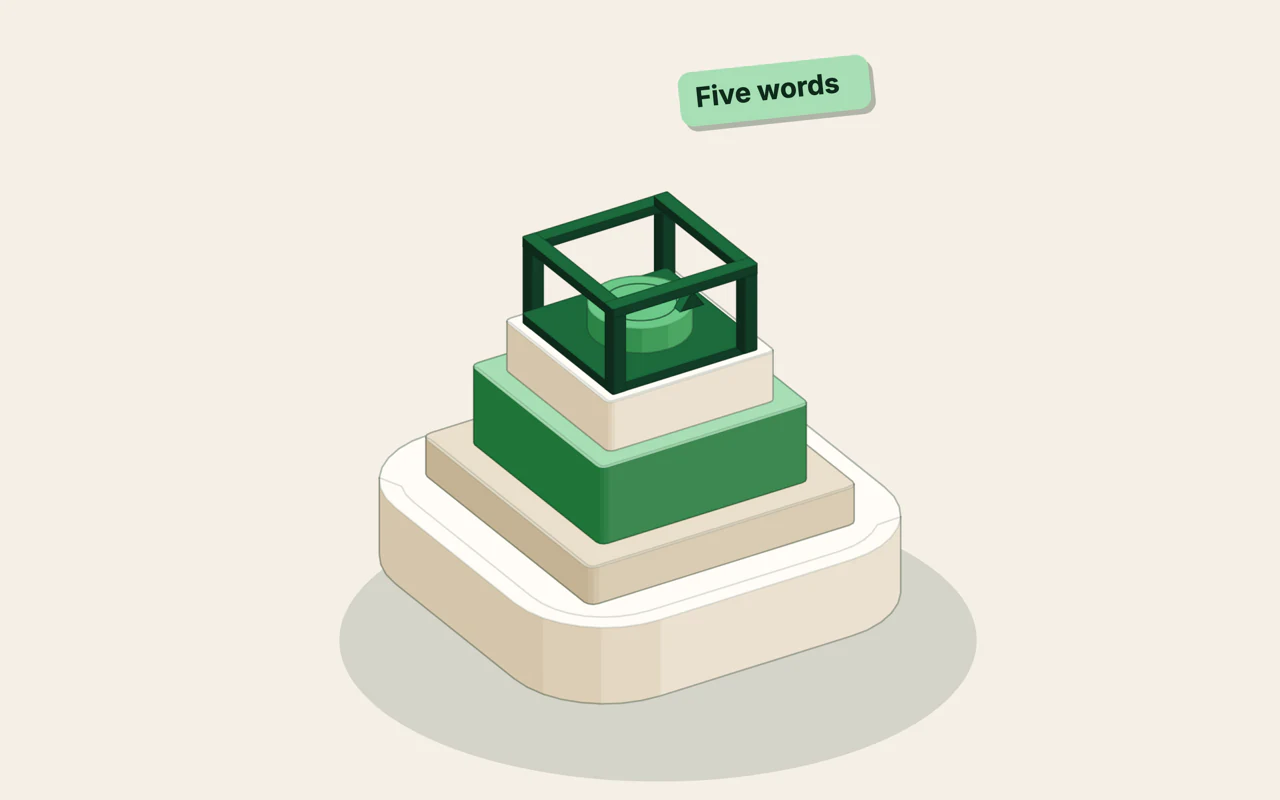
Five words cause most of the confusion around AI: model, company, app, agent and harness. People use them as if they meant the same thing, and headlines mix them freely. Once they sort into place, a pricing page or a news story about a merger stops being a puzzle. One picture carries the whole lesson: a car.
Model: the engine
The model is the trained software at the center of it all. It predicts the next piece of text, and by doing that well it can write, summarize, read an image, or ask to use a tool. On its own it does nothing, the way an engine on a stand goes nowhere.
Models have names and version numbers. As of November 2026, Anthropic's current models include Claude Opus 5.5 and Claude Sonnet 5.5; Meta's include Muse Spark; SpaceXSI's is Grok. A bigger model is usually slower and costs more to run. A smaller one is faster and cheaper, and plenty good for simple jobs.
Company: the engine maker
The company trains the model and sells access to it. Anthropic makes Claude. OpenAI makes the GPT models behind ChatGPT. Meta makes the Muse models. The company that made Grok was called xAI; it merged into SpaceX and, by October 2026, was operating as SpaceXSI.
Why care who the maker is? The company writes the privacy terms. It decides how long your chats are kept, and whether they can be used to train its next models. It also changes hands: SpaceX agreed to buy Cursor for $60 billion in stock on June 16, 2026. When ownership moves, the terms can move with it.
App: the car
The app is what you open and type into: claude.ai, the Grok app, the Meta AI app. It wraps a model in a chat window and adds what makes it usable, such as file uploads, saved chats and settings.
The same engine can sit in more than one car. Meta says Muse Spark powers the Meta AI app and meta.ai, and is rolling into WhatsApp, Instagram and its other apps. So when someone tells me "I tried AI and it was useless," my first two questions are which app, and which model was inside it.
Agent: a contractor, not a calculator
An agent is a model working in a loop toward a goal. It makes a plan, uses a tool (opens a file, searches, runs a check), looks at what came back, and goes again, until the job is done or it needs you. Anthropic's "Building effective agents" puts it this way: agents are "systems where LLMs dynamically direct their own processes and tool usage," while workflows follow "predefined code paths."
A calculator does exactly what you press. A contractor takes the job, decides the order of the steps, and calls you when there is a choice only you can make. That difference is the reason agents are useful, and the reason they need rules.
Harness: the workshop
The harness is the software that runs the agent's loop. It hands the model its tools, sets what it may and may not touch, loads its standing instructions, and runs the checks. Picture a workshop: the bench, the tools on the wall, the rules posted by the door, and the inspector who signs off. Claude Code's own documentation keeps the two apart, speaking of "Claude (the model)" and "Claude Code (the harness)". Cursor and the Grok Bot app are harnesses too.
Some products are an app and a harness at once. Claude Code is the window I type into, and it is also the workshop around the model. That overlap is fine; the words still describe different jobs.
One detail about workshops matters a lot later in this module. Instructions in a plain memory file are followed, in Claude Code's words, "almost every time." Rules that must hold every time go into the harness itself, as a setting or a hook, because the harness enforces those no matter what the model decides. A hook works like the breaker in an electrical panel: it trips whatever the electrician thinks.
Two more words you will run into
- Token: the unit a model reads and writes in, usually a piece of a word. Prices and limits are counted in tokens, like postage counted by the ounce. Anthropic says one million tokens is roughly 555,000 words.
- Context window: how much text the model can keep in view at once (your messages, files, tool results). Think of it as a desk. Current Claude models have a one million token desk, as of November 2026. A bigger desk holds more papers, and clutter still slows the work.
My own setup, word by word
Here is how the five words map onto what I use to run this site, as of November 2026.
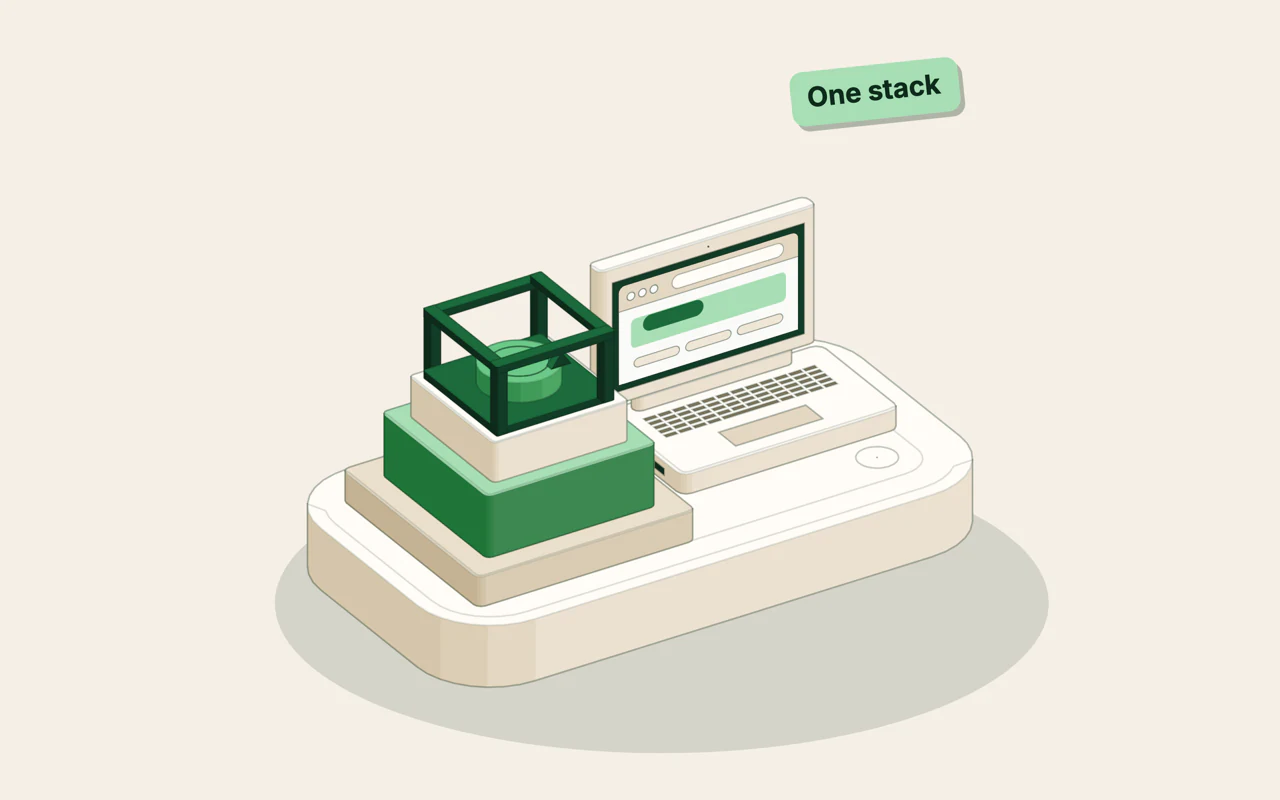
- Company: Anthropic.
- Model: Claude Opus 5.5.
- App and harness: Claude Code, open in the terminal on my Mac. It needs a paid plan; Anthropic's Pro plan was $20 a month when I checked in November 2026.
- Memory file: a plain text file called CLAUDE.md that the agent reads at the start of every session. Mine holds my standing rules: no em dashes in public copy, never touch the public site without asking me, open the page and look at it before calling a job done.
- Agent: when I ask for a lesson like this one, Claude works in a loop. It reads my notes and sources, drafts, draws the figures, loads everything into a private copy of the site, opens the page to check it, fixes what looks wrong, and reports back. For narrow side jobs, such as checking a date, it sends off a helper agent and reads the summary that comes back.
Nothing goes public until I have read it. And none of this work involves client information; the line on that is in HIPAA-safe AI tools, BAAs, and what not to paste.
Names, owners and prices in this lesson were checked against the linked pages on November 24, 2026, and in this field they change within months. The five words will not. When a new product launches, ask which company made it, which model is inside, which app you open, and whether it runs as an agent in a harness; you will know where it fits.
Further reading
- Building effective agents, Anthropic. Workflows versus agents, in plain language.
- Claude Code overview, Anthropic. What a harness looks like in practice, with memory files, skills and hooks.
- From chatbots to agents: a short history of AI. How we got here, the previous lesson.
This lesson's video has its own page
Sources
- “Building effective agents.” Anthropic, Dec 19, 2024. Agents: "systems where LLMs dynamically direct their own processes and tool usage." Workflows: "predefined code paths.". https://www.anthropic.com/engineering/building-effective-agents (accessed Nov 24, 2026).
- “Best practices for Claude Code.” Anthropic. Separates "Claude (the model)" from "Claude Code (the harness)"; memory file instructions followed "almost every time," hooks and settings enforced. https://code.claude.com/docs/en/best-practices (accessed Nov 24, 2026).
- “Claude Code overview.” Anthropic. CLAUDE.md memory files, skills, hooks and subagents. https://code.claude.com/docs/en/overview (accessed Nov 24, 2026).
- “Models overview.” Anthropic. Current Claude models, 1M-token context, about 555k words per 1M tokens. https://platform.claude.com/docs/en/about-claude/models/overview (accessed Nov 24, 2026).
- “Plans and pricing.” Anthropic. Pro $20 a month, includes Claude Code (seen 2026-11-24). https://claude.com/pricing (accessed Nov 24, 2026).
- “Introducing Muse Spark.” Meta, Apr 8, 2026. Muse Spark powers the Meta AI app and meta.ai. https://about.fb.com/news/2026/04/introducing-muse-spark-meta-superintelligence-labs/ (accessed Nov 24, 2026).
- “The X Subscription.” SpaceXSI (x.ai), Oct 12, 2026. Launch post uses the SpaceXSI name. https://x.ai/news/x-subscription (accessed Nov 24, 2026).
- “SpaceX to acquire Cursor for $60B in stock.” TechCrunch, Jun 16, 2026. https://techcrunch.com/2026/06/16/spacex-to-acquire-cursor-for-60b-in-stock-days-after-blockbuster-ipo/ (accessed Nov 24, 2026).
- “Introducing the Model Context Protocol.” Anthropic, Nov 25, 2024. https://www.anthropic.com/news/model-context-protocol (accessed Nov 24, 2026).
- “What are AI Agents?.” IBM Technology (YouTube), Jul 15, 2024. The video on this lesson. https://www.youtube.com/watch?v=F8NKVhkZZWI (accessed Nov 24, 2026).
Study guide
The five words
- Model: the engine. Trained software that predicts the next piece of text (Claude Opus 5.5, Muse Spark, Grok)
- Company: the engine maker. Trains and sells the model, writes the privacy terms (Anthropic, Meta, SpaceXSI, OpenAI)
- App: the car. What you open and type into (claude.ai, the Grok app, the Meta AI app)
- Agent: a contractor. A model working in a loop toward a goal (Anthropic's definition)
- Harness: the workshop. Runs the loop: tools, permissions, memory file, checks (Claude Code, Cursor, Grok Bot)
Two more terms
- Token: a piece of a word; prices and limits are counted in them. 1 million tokens is about 555,000 words (Anthropic)
- Context window: how much the model can keep in view at once, like a desk
- Memory file: plain text the agent reads every session, such as CLAUDE.md
- Hook: a rule the harness enforces every time, like a breaker
Facts that move (checked November 24, 2026)
- xAI now operates as SpaceXSI (x.ai, October 2026)
- SpaceX agreed to buy Cursor for $60 billion in stock on June 16, 2026 (TechCrunch)
- Claude Pro, which includes Claude Code: $20 a month (claude.com/pricing)
Four questions for any new AI product
- Which company made it?
- Which model is inside?
- Which app do I open?
- Does it run as an agent, and in what harness?
Check what you learned
10 questions from this lesson. Answers are checked as you go; nothing is recorded.
1 / 10
In the car picture, what is the model?
Hint
It does nothing on its own.
The model is the engine: powerful, but it goes nowhere until it is put in something.
2 / 10
Which of these is a company rather than a model?
Hint
Who builds the engine?
Anthropic is the company. Claude Opus 5.5, Muse Spark and Grok are models.
3 / 10
As of November 2026, what name does the company that made Grok operate under?
Hint
The company section.
xAI merged into SpaceX and, by October 2026, was operating as SpaceXSI.
4 / 10
Why does the lesson say it matters which company is behind a tool?
Hint
Who writes the terms?
The company controls retention and training terms, and those can change when ownership changes.
5 / 10
What is the app?
Hint
The car you drive.
The app wraps a model in a chat window with uploads, saved chats and settings.
6 / 10
What makes something an agent?
Hint
Contractor, not calculator.
An agent directs its own steps and tool use until the job is done or it needs you.
7 / 10
According to Anthropic, how do workflows differ from agents?
Hint
Building effective agents.
Anthropic separates the two: fixed paths for workflows, self-directed steps for agents.
8 / 10
What does the harness do?
Hint
The workshop.
The harness is the bench, tools, posted rules and inspector around the model.
9 / 10
If a rule must hold every single time, where does it belong?
Hint
The breaker in the panel.
Claude Code says memory file instructions are followed "almost every time." The harness enforces hooks and settings always.
10 / 10
In the author's own setup, what is Claude Code?
Hint
My own setup section.
Claude Code is the window he types into and the workshop that hands the model its tools. Anthropic is the company and Claude Opus 5.5 the model.
Worth another look


