This lesson is for a therapist trying to decide how much to spend on marketing a private practice, and what that money should be expected to do. I traced the numbers that get repeated in this conversation back to the documents that contain them, and several turned out to be smaller, older, or less official than the blogs quoting them suggest. What is left is a handful of real figures, each with its sample size attached, one worked example labelled as arithmetic on a national median, and a short list of things to write down before you spend more.
1. Where "7 to 8 percent of revenue" comes from
Hundreds of small-business articles say the SBA recommends spending 7 to 8 percent of revenue on marketing. The source is a July 9, 2019 SBA blog post, now archived on the agency's legacy subdomain. It does not issue that figure as policy.
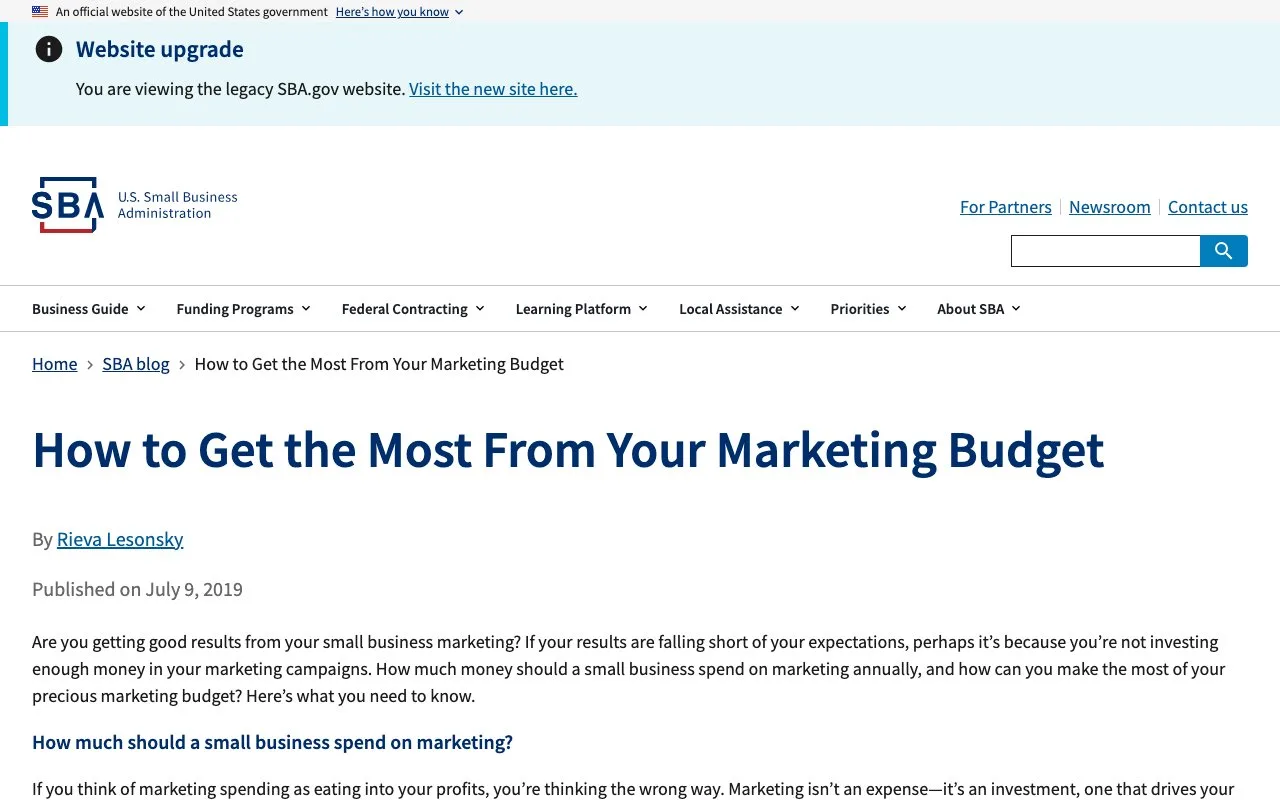
The post cites Small Business Trends data putting the average at 1.08 percent of revenue, and a 2018 Web Strategies survey averaging 7.9 percent (6.3 percent for B2B products, 6.9 for B2B services, 9.6 for B2C products, 11.8 for B2C services). Its own conclusion: there is "no hard and fast answer." Treat any percentage rule as a starting range someone else made up for a different kind of business.
2. What large companies report, and why it does not transfer
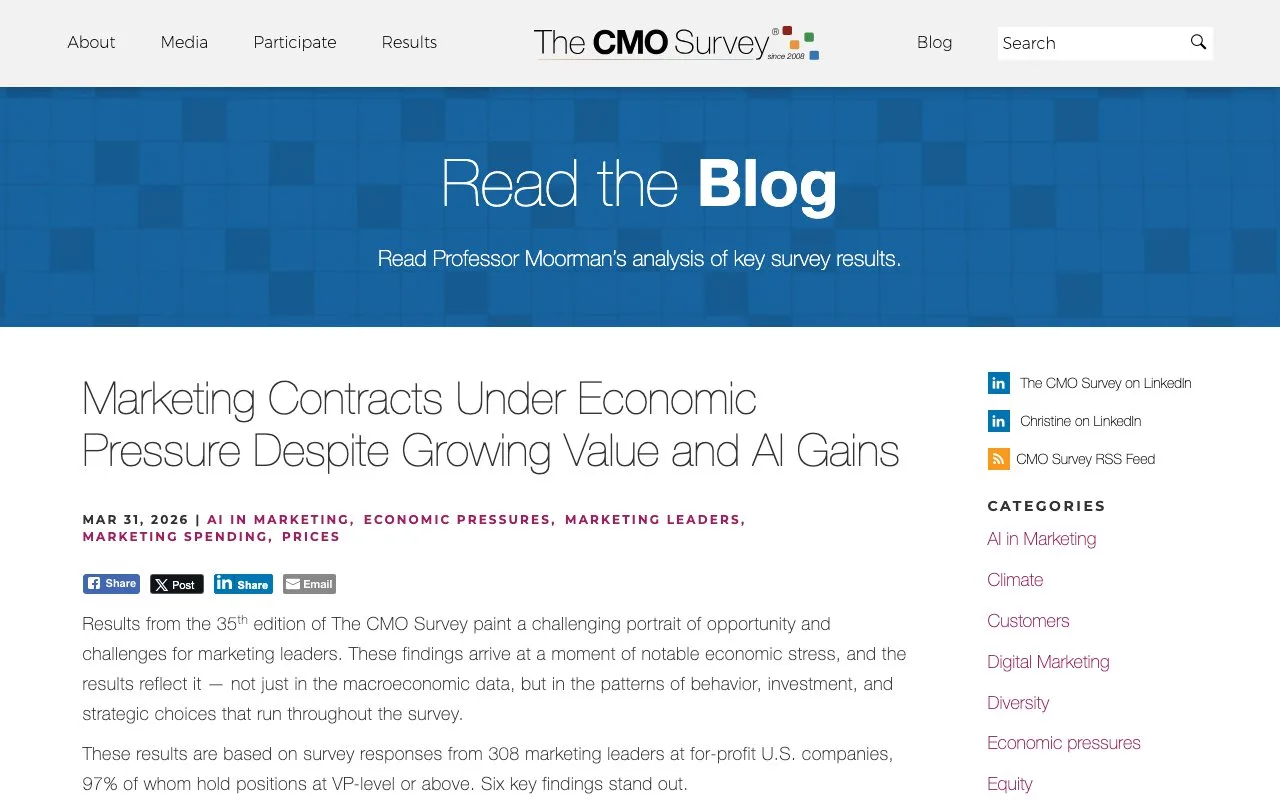
The two surveys that get quoted most are built from companies nothing like a solo practice. Gartner's 2026 CMO Spend Survey reported marketing at 7.8 percent of revenue, from 401 chief marketing officers, most at companies with more than a billion dollars in revenue; I read those figures in reports on its May 11, 2026 release, not on Gartner's own page, so open it yourself before you quote them. The CMO Survey, run by Deloitte, Duke's Fuqua School and the American Marketing Association, fielded its 35th edition January 7 to 29, 2026 among 308 marketing leaders at US for-profit companies: 9.0 percent of revenue, the lowest share since 2021, with spending growth of 1.7 percent. The two disagree because they sample different populations. Together they say one useful thing: even well-funded companies have trimmed marketing's share since about 2021.
3. What therapists themselves report
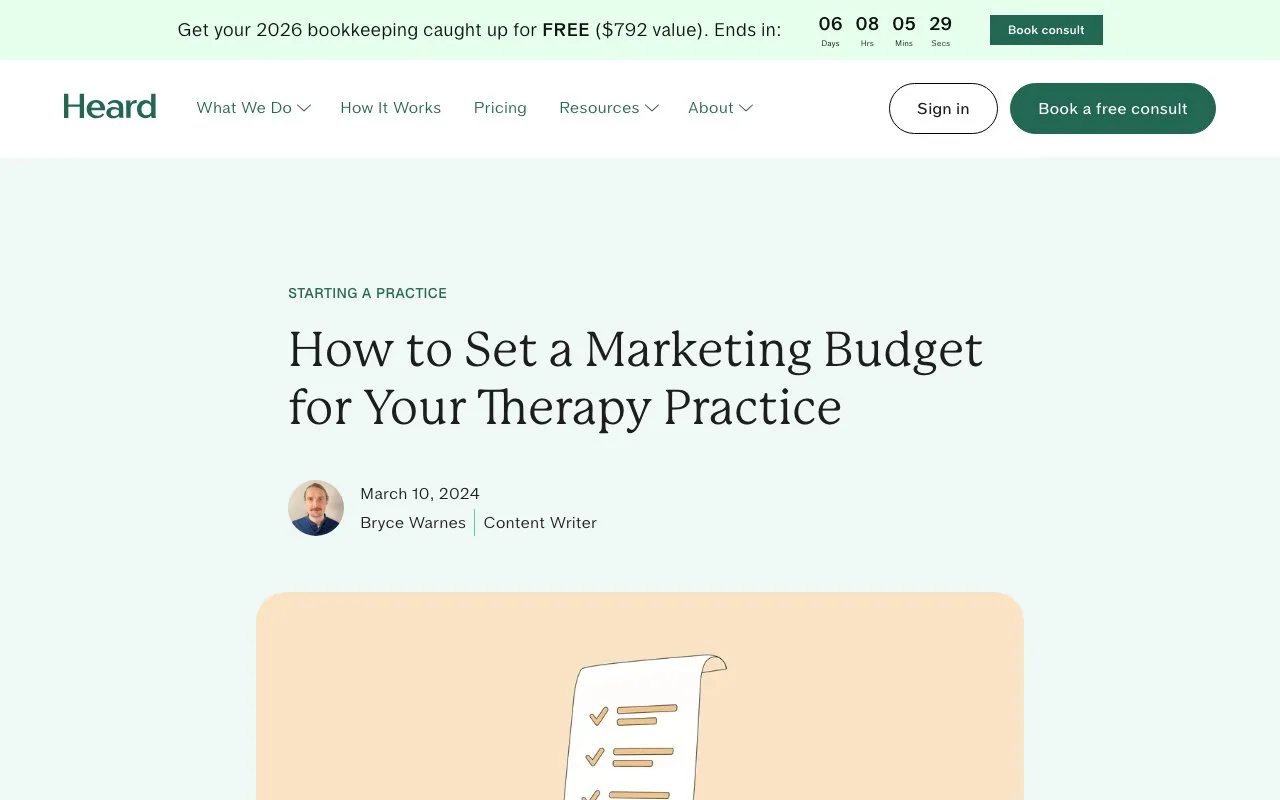
Heard's 2026 Financial State of Private Practice report, from a survey of nearly 2,000 therapists nationwide, puts median practice revenue at $80,412 for 2025, up from $68,222, with median expenses up 45 percent. The public landing page does not break out marketing; if the full report does, I have not read it. Heard's separate article on setting a marketing budget cites what it calls an unscientific poll of 73 therapists on social media, in which 79.5 percent said they spend under $100 a month. Seventy-three self-selected people is an anecdote, not a benchmark, and I present it as one. Heard's own advice is in dollars rather than percentages: most solo practices can run on less than $100 a month.
Tebra's survey of independent practices (updated September 28, 2025) had 106 respondents, 94 percent of them physicians, so it is a physician survey rather than a therapy one: 62 percent spend 1 to 5 percent of gross revenue on marketing. Side by side, the four sources fall into two groups: large companies reporting a share of revenue, and small practices surveyed in small numbers.
4. The free channel first
A Business Profile on Google costs nothing to create and verify, and Google's getting-started page walks through it. Its local ranking page adds that "there's no way to request or pay for a better local ranking on Google," which means the free channel is not a lesser version of something you could buy. Do this before spending a dollar anywhere else; the steps are in local SEO for therapists.

5. What a profile costs, from the vendors' own pages
I only print prices I read on the seller's own page. I could not confirm prices on the paid profile sites' own pages, and the figures I did find disagreed with each other, so I am not repeating them. Get each one from its own site. A Business Profile on Google is the one I can price with confidence: $0.
6. Google Ads without guessing
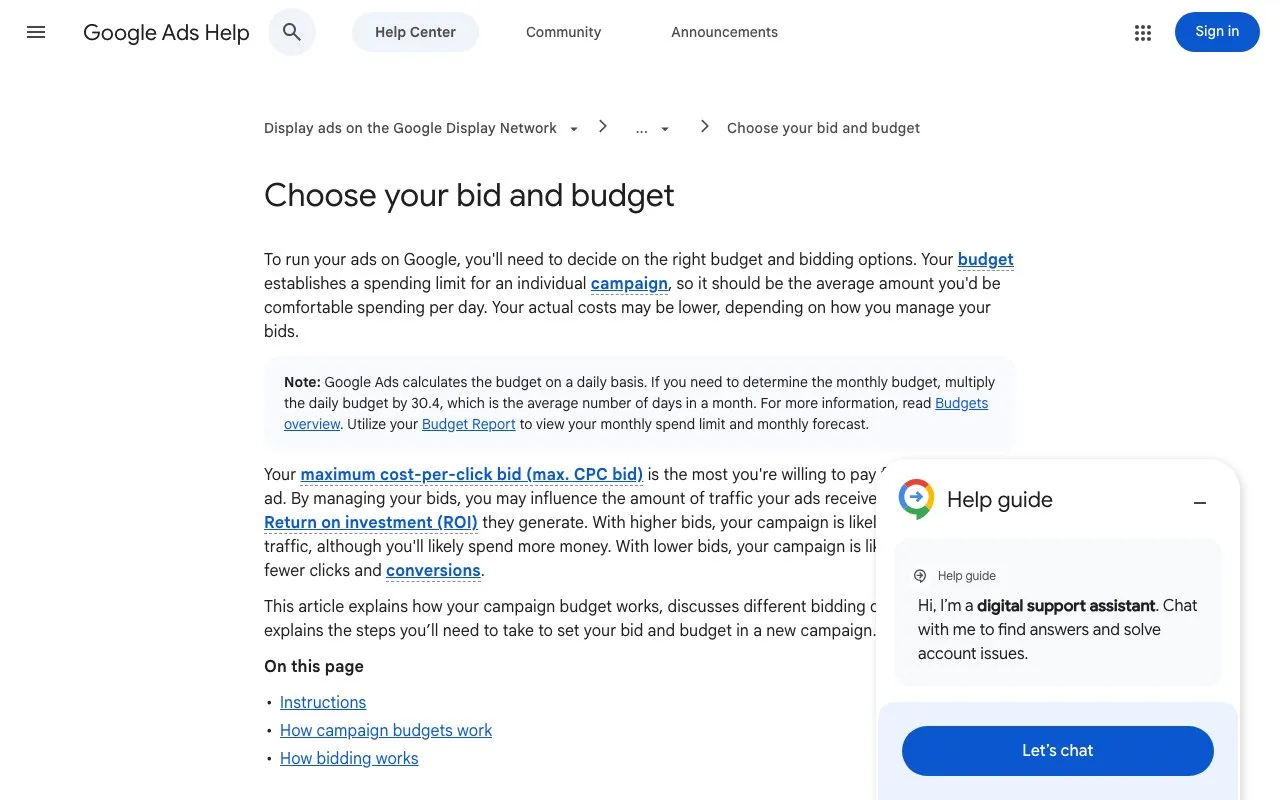
Google publishes no minimum daily budget for a standard Search campaign. Its help page on choosing a bid and budget describes the daily budget as something you set and change, with no floor stated. The "$5 to $10 a day for meaningful data" figure you will read is industry practice, not Google's number. One narrow exception: as of April 1, 2026, the Ads API enforces a $5 a day minimum for Demand Gen campaigns, a different automated format. Pick a daily figure you could sustain for 90 days before you start.
7. A worked example, labelled
This is arithmetic on the figures above, not a new data point, and the revenue figure is a national median across all states; I found no primary source for Oregon-specific session fees or practice revenue. Take Heard's 2025 median revenue of $80,412 as a stand-in for a modest, established solo practice. At the low end of Tebra's 1 to 5 percent range, about 3 percent, that is roughly $2,400 a year, or $200 a month.
| Line | Yearly | Basis |
|---|---|---|
| Business Profile on Google | $0 | Free, Google's page |
| Left for a sustained ads test, a photo refresh, or savings | about $2,400 | The whole budget, since the profile is free |
If your revenue is half that median, halve the total and drop a line rather than spreading $100 a month across everything.
8. What to track before spending more
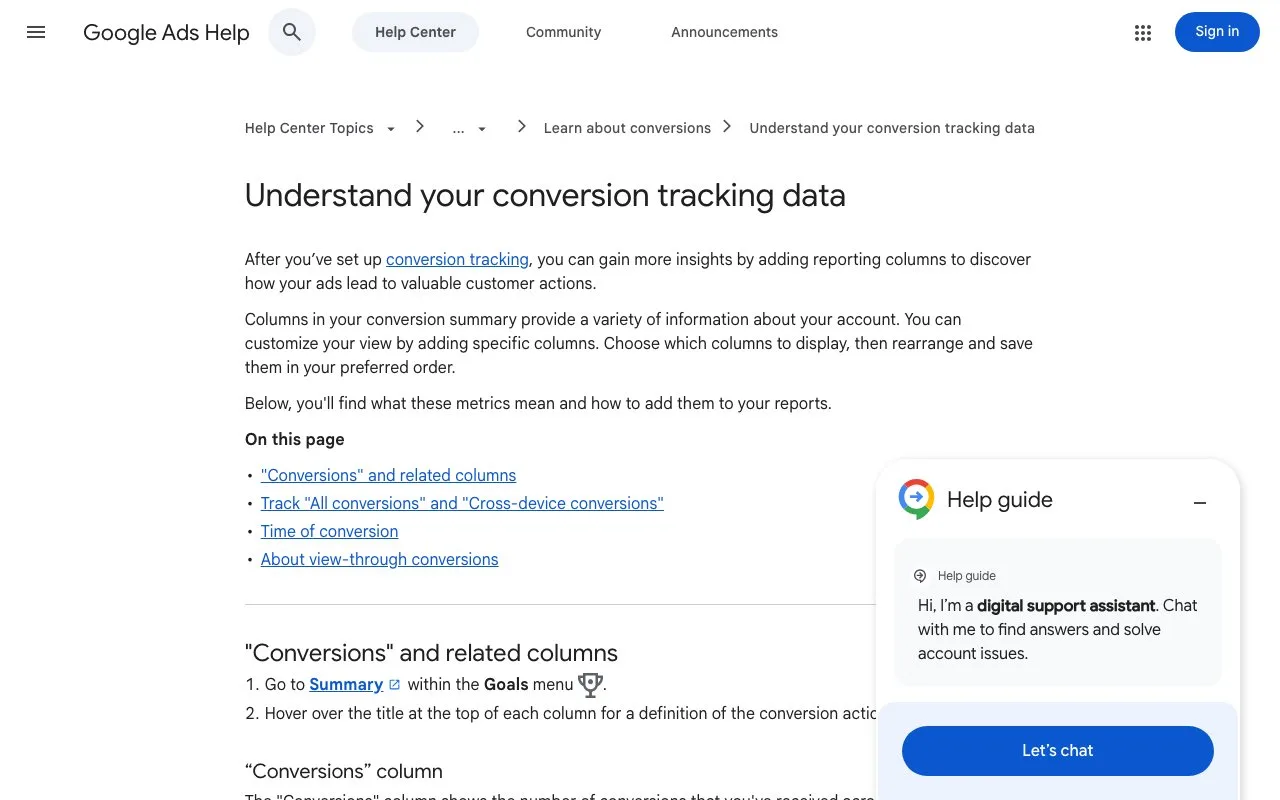
Write down what each channel cost and what it produced: not clicks, but new clients who booked. Google's help page on reading conversion tracking data is where that starts for ads; for a paid profile, it is the site's own contact count or a question you ask every new client. Revisit the budget after 90 days of real numbers, not projections, and before tax season makes you reconstruct it.
These are cited figures and my own practice's habits, not financial advice; a CPA gets the final word on what you can deduct.
Sources
- “How to get the most from your marketing budget.” U.S. Small Business Administration (archived blog), Jul 9, 2019. Cites Small Business Trends and a 2018 Web Strategies survey; concludes there is no hard and fast answer. https://legacy.sba.gov/blog/how-get-most-your-marketing-budget (accessed Sep 24, 2026).
- “Marketing contracts under economic pressure despite growing value and AI gains.” The CMO Survey, Mar 31, 2026. 35th edition, 308 marketing leaders, fielded January 7 to 29, 2026. https://cmosurvey.org/marketing-contracts-under-economic-pressure-despite-growing-value-and-ai-gains/ (accessed Sep 24, 2026).
- “The Heard 2026 Financial State of Private Practice report.” Heard. Landing page only; the full report was not read. https://www.joinheard.com/resources/downloads/the-heard-2026-financial-state-of-private-practice-report (accessed Sep 24, 2026).
- “How to set a marketing budget for your therapy practice.” Heard, Mar 10, 2024. Includes an unscientific poll of 73 therapists; treated as an anecdote. https://www.joinheard.com/articles/how-to-set-a-marketing-budget-for-your-therapy-practice (accessed Sep 24, 2026).
- “Survey reveals healthcare marketing budget benchmarks for independent practices.” Tebra, The Intake, Sep 28, 2025. 106 respondents, 94 percent physicians; not therapy-specific. https://www.tebra.com/theintake/medical-deep-dives/get-new-patients/survey-reveals-healthcare-marketing-budget-benchmarks-for-independent-practices (accessed Sep 24, 2026).
- “Get started with Google Business Profile.” Google Business Profile Help. No revision date shown. https://support.google.com/business/answer/7039811?hl=en (accessed Sep 24, 2026).
- “Tips to improve your local ranking on Google.” Google Business Profile Help. No revision date shown. https://support.google.com/business/answer/7091?hl=en (accessed Sep 24, 2026).
- “Choose your bid and budget.” Google Ads Help. No revision date shown. https://support.google.com/google-ads/answer/2375454?hl=en (accessed Sep 24, 2026).
- “Understand your conversion tracking data.” Google Ads Help. No revision date shown. https://support.google.com/google-ads/answer/6270625?hl=en (accessed Sep 24, 2026).
Documents
Templates and worksheets that go with this lesson.
Marketing budget checklist
Check what you learned
8 questions from this lesson. Answers are checked as you go; nothing is recorded.
1 / 8
What average share of revenue does the July 9, 2019 SBA blog post cite from Small Business Trends data?
Hint
Read section 1, on where the 7 to 8 percent figure comes from.
The post cites Small Business Trends data putting the average at 1.08 percent of revenue and concludes there is "no hard and fast answer." It does not issue 7 to 8 percent as a recommendation.
2 / 8
What is the median practice revenue reported by Heard's 2026 Financial State of Private Practice for 2025?
Hint
Check the median revenue figure in the therapists report.
Heard reports a median revenue of $80,412 for 2025.
3 / 8
What share of revenue did Gartner's 2026 CMO Spend Survey report for marketing?
Hint
Find the Gartner CMO Spend Survey figure in the lesson.
Gartner's 2026 CMO Spend Survey, of 401 chief marketing officers mostly at companies with more than a billion dollars in revenue, reported marketing at 7.8 percent of revenue.
4 / 8
Which listing can you create and verify at no charge?
Hint
Look for the channel priced at $0 in the lesson.
Google's getting-started page says a Business Profile lets you manage how you appear on Maps and Search at no charge.
5 / 8
What minimum daily budget does Google Ads enforce for Demand Gen campaigns as of April 1, 2026?
Hint
Find the exception for Demand Gen campaigns.
Demand Gen campaigns require a $5 a day minimum.
6 / 8
In the worked example, what is the approximate annual marketing budget for a practice with median revenue of $80,412 using 3 percent of revenue?
Hint
Calculate 3 percent of $80,412.
3 percent of $80,412 is roughly $2,400 a year.
7 / 8
Which of the following is NOT a recommended step before spending more on marketing?
Hint
Consider the tracking advice in the lesson.
The lesson advises setting a daily budget after reviewing data, not before.
8 / 8
How does the lesson say to treat the "7 to 8 percent" rule that articles credit to the SBA?
Hint
Read the end of the section on where "7 to 8 percent of revenue" comes from.
The SBA post does not issue that figure as policy; the lesson says to treat any percentage rule as a starting range someone else made for a different kind of business.
Worth another look


